
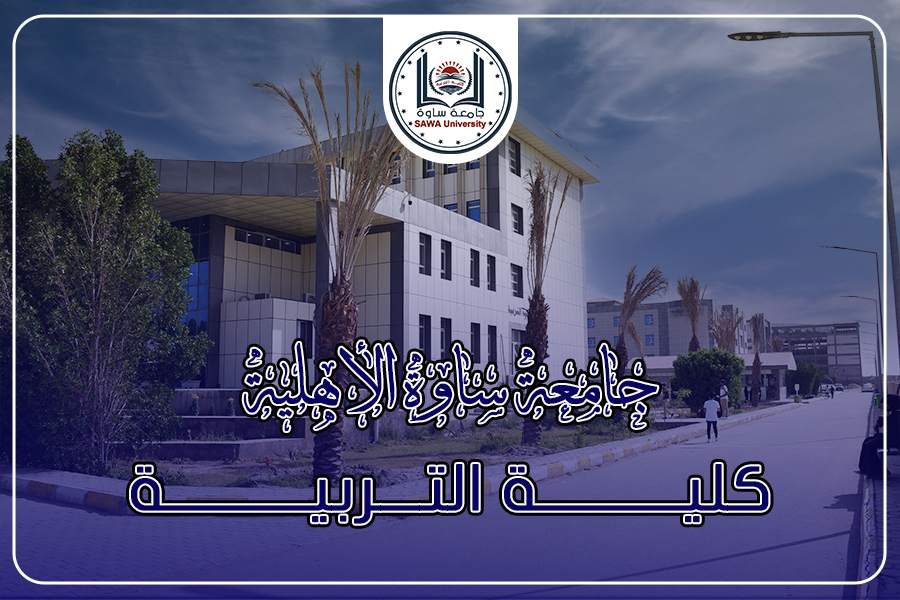
Strategic Plan of the College of Education
Sawa Private University
For the Period 2026–2030
Introduction
The College of Education at Sawa Private University seeks to strengthen its scientific and academic standing and to contribute effectively to the preparation of qualified educational and scientific cadres capable of keeping pace with scientific, educational, and technological developments and responding to the needs of society and the labor market
The Strategic Plan of the College of Education for the period 2026–2030 is aligned with the directions of Sawa Private University in developing the quality of teaching and learning, improving the educational environment, enhancing the capabilities of academic staff, supporting scientific research and innovation, strengthening community service, and promoting continuous improvement
In preparing the plan, consideration was given to the current status of the College, its academic and educational capabilities, its scientific specializations, the needs of its students, recent developments in education and technology, as well as quality and academic accreditation requirements
First: Overview of the College of Education
The College of Education at Sawa Private University was established in 2020. It is one of the University’s colleges in Al-Muthanna Governorate and offers four-year academic programs leading to a Bachelor’s degree in Education
The College includes a number of scientific and educational departments, including:
· Department of English Language
· Department of Arabic Language
· Department of Quranic Sciences
· Department of Computer Science
The College provides an educational environment that includes a Computer Applications Laboratory, a Multimedia Laboratory, and a Sound Laboratory, contributing to the support of both theoretical and practical aspects of the educational process.
Second: Vision
Leadership and excellence in preparing educational and scientific cadres and building an academic environment that stimulates learning, research, and innovation, thereby contributing to community service and sustainable development.
Third :College Admission System
Admission to undergraduate studies at the College of Education is conducted through application forms designated for this purpose. Graduates of preparatory schools from the biological, applied, and literary branches are accepted, and the duration of study is four years.
Fourth: Mission
The College of Education at Sawa Private University seeks to prepare graduates who are academically and professionally qualified in educational and scientific fields through advanced academic programs, a supportive educational and research environment, the use of modern technologies and digital transformation, and the enhancement of scientific research and community service in accordance with standards of quality, academic accreditation, and continuous improvement.
Fifth: Institutional Values
The College of Education is committed to a set of values that guide its academic and administrative work, including:
Quality and Excellence
Integrity and Transparency.
Professional Responsibility.
Creativity and Innovation.
Teamwork.
Respect for Students and Their Rights.
Social Responsibility.
.Continuous Learning
Development and Modernization.
Commitment to University Regulations and Instructions.
Sixth: Strategic Objectives
During the plan period, the College of Education works to achieve the following strategic objectives:
First Objective: Developing the Quality of Teaching and Learning
Enhancing the level of academic programs, teaching methods, and assessment, and achieving learning outcomes that align with the requirements of modern education and the needs of society and the labor market
Second Objective: Developing Organizational and Administrative Performance
Enhancing the efficiency of management and organization within the College, developing strategic and operational planning, defining authorities and responsibilities, and activating monitoring and performance measurement
Third Objective: Supporting Scientific Research and Innovation
Creating a stimulating research environment, increasing scientific output, and encouraging applied research and scientific and innovative projects that address educational and societal issues
Fourth Objective: Developing Academic and Administrative Staff
Enhancing the efficiency of faculty members and employees through continuous training and professional development and encouraging participation in conferences, seminars, and scientific programs
Fifth Objective: Promoting Digital Transformation
Expanding the use of digital technologies in education, administration, and scientific research and developing the skills of students and faculty in employing technology and artificial intelligence in educational fields
Sixth Objective: Enhancing Student Services
Providing a supportive university environment for students, developing academic and educational guidance, enhancing scientific, personal, and professional skills, and promoting student activities
Seventh Objective: Enhancing Community Service and Partnerships
Activating the College’s role in serving the local community, building partnerships with educational, cultural, and community institutions, and contributing to addressing educational problems
Eighth Objective: Consolidating Quality and Academic Accreditation
Building an institutional culture of quality and continuous improvement, developing self-assessment and performance measurement procedures, and preparing for academic accreditation requirements
Seventh: Strategic Axes
First Axis: Organizational Performance and Strategic Management
This axis aims to build an effective administrative and organizational system based on planning, governance, performance measurement, and continuous improvement
Key Programs
Preparing Annual Operational Plans
Updating the Organizational Structure
Developing Job and Responsibility Descriptions
Activating Administrative and Academic Committees and Units
Developing E-Administration
Adopting Institutional Performance Indicators
Risk and Crisis Management
Preparing Annual Performance Reports
Second Axis: Teaching and Learning
This axis focuses on developing programs, curricula, and teaching methods, employing modern technologies in the educational process, and improving learning outcomes.
Key Programs
Developing Teaching Methods
Activating E-Learning
Developing Educational Laboratories
Improving Assessment and Examination Methods
Aligning Learning Outcomes with Labor Market Needs
Supporting Practical Application for Students
Third Axis: Students and Student Services
This axis aims to improve the student experience within the College and support academic and personal progress. Among the Key Programs here:
Developing Academic Advising
Activating Psychological and Educational Counseling
Following Up on Struggling Students
Developing Student Activities
Developing Personal and Professional Skills
Measuring Student Satisfaction
Following Up on Graduates
Fourth Axis: Scientific Research and Innovation
This axis aims to build an effective scientific and research environment and encourage faculty members and students to produce scientific research
Key Programs
Increasing Scientific Publications
Encouraging Joint Research among Departments
Supporting Applied Research
Organizing Scientific Conferences and Seminars
Encouraging Student Participation in Scientific Research
Supporting Innovation and Patents
Linking Scientific Research to Community Issues
Fifth Axis: Human Resources
This axis focuses on developing the scientific and professional capabilities of academic and administrative staff; among its key programs
Professional Development Programs
Training in Modern Teaching Methods
Training in E-Learning
Training in Artificial Intelligence Applications
Training in Quality and Accreditation
Developing Research and Scientific Publishing Skills
Periodic Performance Evaluation
Sixth Axis: Digital Transformation and Artificial Intelligence
This axis aims to enhance the use of modern technology in education, administration, and scientific research
Key Programs
Digitizing Administrative Procedures
Developing Electronic Archiving
Employing Artificial Intelligence in Education
Training Faculty Members and Students on Artificial Intelligence Tools
Developing Computer Laboratories
Creating Academic and Administrative Databases
Supporting Digital and Innovative Projects
Seventh Axis: Community Service and Partnerships
This axis aims to strengthen the community role of the College of Education through scientific, training, and awareness programs
Key Programs
Conducting Training Courses for Educational Staff
Organizing Community Seminars and Workshops
Providing Educational Consultations
Implementing Community Service Initiatives
Engaging Students in Community Activities
Eighth Axis: Quality and Academic Accreditation
This axis aims to consolidate a culture of quality and achieve continuous improvement in academic and administrative performance
Key Programs
Activating the Quality Assurance Unit
Preparing Academic Program Files
Conducting Self-Assessment
Measuring Learning Outcomes
Conducting Student Satisfaction Surveys
Preparing Improvement Plans
Documenting Evidence and Supporting Records
Monitoring Performance Indicators
Mechanism for Implementing the Plan
The Deanship of the College of Education, in coordination with the scientific departments, quality and university performance units, and relevant committees, is responsible for implementing the strategic plan according to annual operational plans
The College relies on the following cycle to monitor the plan
Planning → Implementation → Measurement → Evaluation → Continuous Improvement
An annual report is prepared to show
The implementation rate of each objective
The level of achievement of performance indicators
Obstacles and Challenges
Corrective Actions
Opportunities for Improvement
Proposals for the Following Year
Eighth: Responsibility for Implementing the Plan
Responsibility for implementing the plan is distributed among
Deanship of the College of Education
Heads of Scientific Departments
Quality Assurance and University Performance Unit
Scientific and Academic Committees
Administrative Units
Faculty Members
Representatives of Students and Graduates in Relevant Activities and Programs
Ninth: Monitoring and Evaluation
The implementation of the plan is monitored periodically by measuring performance indicators, comparing results with targets, identifying strengths and weaknesses, and establishing appropriate corrective actions.
The College adopts the principle of continuous improvement as a basis for developing its academic and administrative performance, in line with the directions of Sawa Private University toward developing its scientific and administrative staff and keeping pace with modern scientific and educational curricula
Tenth: Expected Outcomes of the 2026–2030 Plan
The plan is expected to contribute to:
1. Improving the Quality of the Educational Process
2. Improving Administrative and Organizational Performance
3. Increasing Scientific and Research Output
4. Developing Faculty Members’ Skills
5. Improving Services Provided to Students
6. Enhancing Digital Transformation
7. Increasing the College’s Contribution to Community Service
8. Enhancing the Culture of Quality and Academic Accreditation
9. Developing Scientific and Community Partnerships
10. Building an Educational College Capable of Keeping Pace with Scientific and Technological Developments
Conclusion
The Strategic Plan of the College of Education at Sawa Private University for 2026–2030 represents an institutional framework for developing the College’s academic, administrative, research, and community performance and achieving integration between the College’s objectives and the University’s directions, thereby strengthening the College’s standing and enabling it to keep pace with scientific and educational developments and the requirements of quality and academic accreditation
The College affirms its commitment to periodically reviewing the plan and updating its programs and indicators in line with scientific and educational developments and the needs of society and the labor market.